
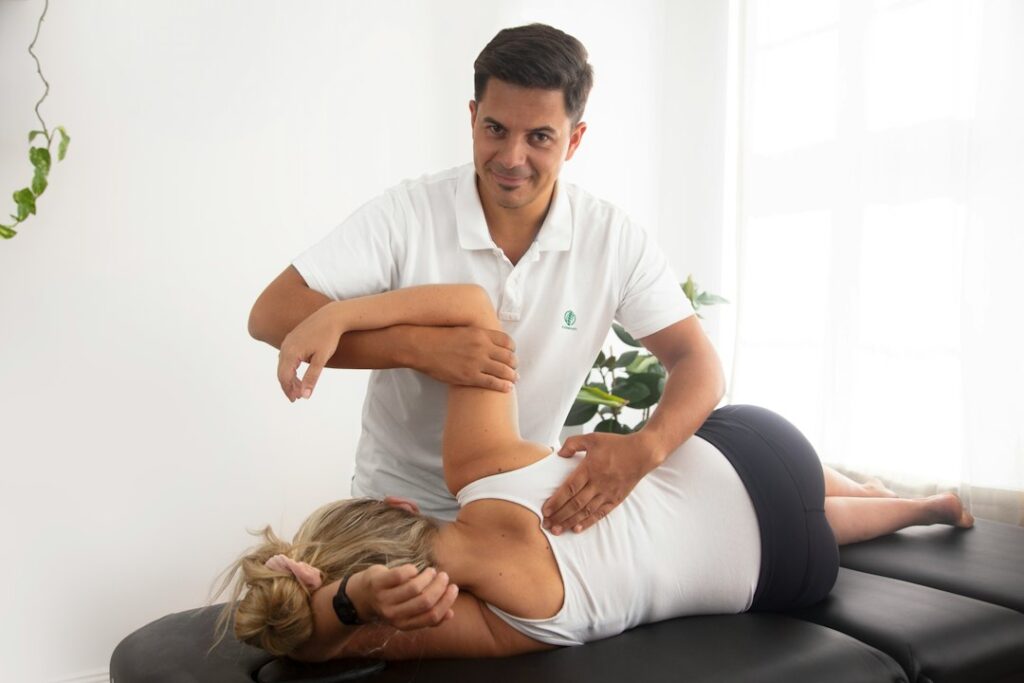
What role can chiropractic play in sports injury prevention?
In Valley Stream, NY, athletes of all ages participate in activities that place repeated demands on the back, neck, shoulders, hips, knees, and ankles. Chiropractic care may support injury prevention by identifying movement limitations, addressing certain musculoskeletal problems, and helping athletes build better habits around mobility, strength, recovery, and training loads.
It should not be viewed as a guarantee against injury or as a replacement for medical care, physical therapy, athletic training, proper conditioning, or safe coaching. Sports injuries usually result from several factors working together, including fatigue, sudden increases in activity, poor technique, previous injury, inadequate recovery, and accidents.
The most useful role of chiropractic is often preventive education and musculoskeletal support within a broader sports-health plan.
How can a chiropractor identify injury risks before pain begins?
An evaluation may look at joint movement, muscle flexibility, posture, balance, coordination, and the way a person performs sport-specific movements. For example, limited ankle motion can affect squatting, jumping, running, or landing. Reduced hip mobility may alter mechanics in the lower back or knee.
These findings do not automatically mean an injury will occur. A movement difference is a possible risk factor, not a diagnosis. Screening is most helpful when it leads to practical changes, such as:
- Improving warm-up routines
- Strengthening weak or underused muscle groups
- Practicing better landing or lifting mechanics
- Adjusting training volume
- Addressing recurring soreness before it becomes more limiting
- Improving recovery between practices and competitions
For young athletes, screening should be age-appropriate and should account for growth, developing coordination, and changes in training demands.
Can chiropractic adjustments prevent sports injuries?
There is not strong evidence that spinal adjustments alone prevent all sports injuries or improve athletic performance in healthy people. Chiropractic treatment may be useful for selected musculoskeletal concerns, especially when it is combined with exercise, mobility work, activity modification, and education.
An adjustment may temporarily improve comfort or movement for some people with certain back, neck, or joint problems. However, lasting injury prevention depends more on addressing the underlying contributors. These may include insufficient strength, poor movement control, inadequate rest, unsafe equipment, or returning to activity too quickly.
A responsible approach does not treat routine adjustments as a substitute for conditioning. It also avoids claims that spinal manipulation can prevent concussions, heat illness, fractures, ligament tears, or other injuries unrelated to the spine and surrounding muscles and joints.
Which sports-related problems may benefit from chiropractic care?
Chiropractic care may have a role in managing some activity-related problems involving muscles, joints, and the spine. Examples can include mechanical low-back discomfort, restricted joint motion, minor strains, overuse-related soreness, and movement limitations that affect training.
The appropriate treatment depends on the cause, severity, and duration of symptoms. Some problems require rest and gradual rehabilitation. Others need evaluation for imaging, medication, orthopedic care, or urgent treatment.
Warning signs that should not be managed as a routine sports adjustment include:
- Severe or worsening pain
- Inability to bear weight
- Major swelling or visible deformity
- Numbness, weakness, or loss of coordination
- Loss of consciousness
- Repeated vomiting after a head injury
- Severe headache, confusion, or unusual behavior
- Chest pain, fainting, or trouble breathing
Neck manipulation also requires careful screening. People should discuss relevant medical conditions, medications, prior injuries, and neurological symptoms before any hands-on treatment.
Why are strength and mobility more important than flexibility alone?
Mobility describes the ability to move through a useful range of motion. Flexibility is only one part of that ability. An athlete may have adequate flexibility but lack the strength or control needed to stabilize a joint during sprinting, cutting, lifting, or landing.

Effective prevention commonly combines:
- Strength training for the hips, legs, trunk, shoulders, and upper back
- Balance and coordination exercises
- Gradual exposure to jumping, sprinting, and direction changes
- Sport-specific technique practice
- Mobility work for restricted areas
- Recovery periods between demanding sessions
A chiropractor may help identify mobility or movement issues, but strengthening and rehabilitation exercises are often central to reducing future problems. Those exercises should match the athlete’s age, sport, injury history, and current conditioning.
How do training habits affect injury risk?
A sudden increase in activity is a common contributor to overuse injuries. This can happen when a person begins preseason conditioning, joins a new team, increases running mileage, adds weightlifting, or participates in several sports at once.
Training should progress gradually. Pain that consistently worsens during activity, changes movement mechanics, or remains present during ordinary daily tasks deserves attention rather than being ignored.
Sleep, nutrition, hydration, and rest also matter. During hot and humid summer conditions, athletes need time to adapt to heat, regular fluid access, appropriate clothing, and scheduled breaks. Fatigue can reduce coordination and reaction time, making otherwise familiar movements less controlled.
Local residents may also face seasonal changes in training surfaces and routines. Indoor winter activity, outdoor spring practices, summer heat, and fall sports schedules can each create different demands. A year-round plan should account for these transitions instead of treating every season as the same.
What should athletes do after an injury?
The first step is to stop or modify the activity that causes significant pain. Continuing to compete may turn a manageable problem into a longer recovery, particularly when an athlete changes technique to protect a painful area.
Return to sport should be gradual. Before resuming full participation, the athlete should generally be able to perform ordinary movements, sport-specific drills, and progressive practice without a meaningful increase in symptoms.
Head injuries require particular caution. An athlete with possible concussion symptoms should be removed from play and evaluated according to established return-to-sport guidance. Chiropractic care does not replace concussion assessment or medical supervision.
How should chiropractic fit into a broader prevention plan?
The safest model is coordinated care. Depending on the situation, that may involve a primary care clinician, sports medicine physician, physical therapist, athletic trainer, coach, or other qualified health professional.
Chiropractic can contribute through movement assessment, education, selected manual techniques, and exercise guidance for appropriate musculoskeletal conditions. Its value is greatest when treatment is individualized, evidence-informed, and connected to the athlete’s actual training demands.
The practical goal is not to promise that injuries will never happen. It is to help athletes recognize early warning signs, prepare their bodies for activity, manage training loads, and return to sport safely after setbacks.
